
What is Your Identity Built On?
And Can it Carry the Weight of Your Life?
Most people build their lives on roles, achievements, experiences, and opinions.
They assume that their personality, values, virtues, behaviors, and habits are their identity.
But very few people ever stop to ask critical questions about their identity such as:
Where did my identity come from? And what was it designed for?
Your Identity
Is the Foundation of Your Being
Origin
Where you come from
Authority
Who has the authority to define you
Nature
What kind of being you are
Worth
Why you matter
Calling
What you were designed for
The Structural Components of Identity
Identity is not a collection of traits or life experiences. It is a structure.
Every identity rests on a set of foundational elements that determine how a person understands themselves and how they move through the world. These elements shape the meaning people assign to their lives, the authority they allow to define them, the nature they believe they possess, the value they believe they carry, and the purpose they believe they were created to fulfill.
When these components are clearly understood and properly aligned, identity becomes stable and resilient. When they are undefined, confused, or sourced from unreliable foundations, the result is instability, confusion, and a constant pressure to perform in order to maintain a sense of self.
The five components above form the structural framework of identity that every human identity rests upon — whether a person recognizes them or not.
The Identity Problem Most People Never See
Why So Many Identities Become Unstable
Every person builds their life on some source of identity.
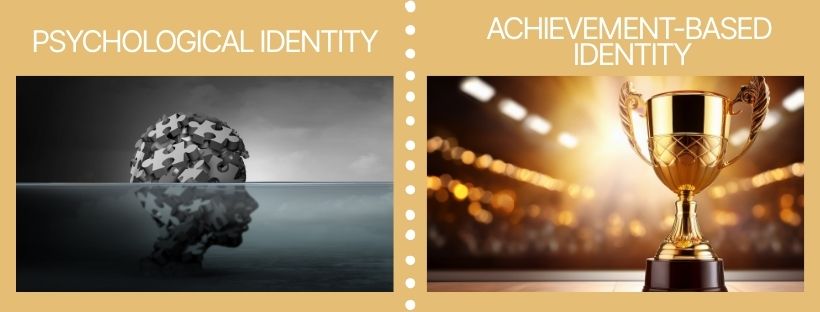
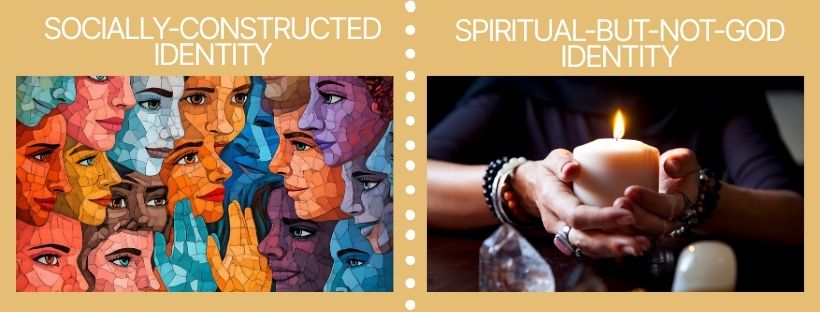
For some, identity grows out of how they interpret their life experiences and the meaning they attach to them. Others build their identity around what they accomplish, produce, or achieve. Some derive their identity from the expectations, labels, and narratives provided by family, culture, or society. Still others look to spiritual influences or belief systems to determine who they are.
Each of these sources can shape how someone understands themselves, but not every source was designed to serve as the foundation of identity.
When identity is built on unstable foundations, it places enormous pressure on the individual to continually prove, defend, or redefine who they are.
Success must constantly be maintained.
Failure feels devastating.
Criticism becomes threatening.
Purpose can feel uncertain or constantly shifting.
The problem is not simply behavior or performance. The problem is the foundation identity is built upon.
Many people unknowingly build their identity on foundations that cannot support the weight of a human life.
What Real Identity Is
Real Identity is Received From God and Established in Christ
If identity is the foundation your life is built upon, then it must come from a source capable of sustaining it.
That means identity must be:
-
Unchanging — not shifting with circumstances or outcomes
-
True — not based on perception, emotion, or interpretation
-
Authoritative — able to define you, not be defined by you
-
Stable — not strengthened by success or weakened by failure
-
Governing — able to direct your decisions and shape your life
Anything that cannot meet these requirements cannot function as identity—no matter how convincing it feels.
Real identity
- It is not fragile.
- It is not reactive.
- It does not need to be sustained by performance or reinforced by approval.
Real identity must come from a source that is:
-
Unchanging
-
Pre-existing
-
And has the authority to define human life
There is only one source that meets those requirements:
God.
Identity Ladder
The Identity Ladder describes the journey from counterfeit identity to identity established in Christ.
The return to our real identity does not happen all at once. It develops through stages based on the choices we make.
The Identity Ladder describes the progression through which identity is examined, re-anchored, transformed, and ultimately lived out with clarity and purpose.
True identity is not self-constructed. It is revealed, restored, and formed in relationship with the One who created us.
Each stage strengthens the foundation of a life that is no longer searching for identity, but living from it.
Commission
Identity becomes stable enough to guide purpose, leadership, and influence. A person begins to live and lead from who they are in Christ rather than searching for identity in external roles or achievements.
Transformation
As identity becomes established, the inner life begins to change. Christ reshapes thinking, character, and choices so that a person’s life gradually aligns with the identity they have received.
Adoption
The stage where identity is re-anchored in its true source. Through Christ, a person receives identity from God and begins to understand who they are as His son or daughter.
Awakening
The moment a person begins to question the foundation their identity has been built upon. Old assumptions become visible. The source of identity begins to be examined.
Entry Point
Before identity can be rebuilt, it must first be examined.
Most people never question the foundation upon which their identity rests. They inherit assumptions about who they are from experiences, achievements, cultural expectations, and the opinions of others.
Awakening is the moment a person begins to see those assumptions clearly.
It is the point where a person pauses long enough to ask deeper questions:
Where did my identity come from?
Who or what has the authority to define me?
And is the foundation my life is built on strong enough to carry the weight of who I am meant to be?
Awakening is not about fixing yourself.
It is about seeing clearly.